

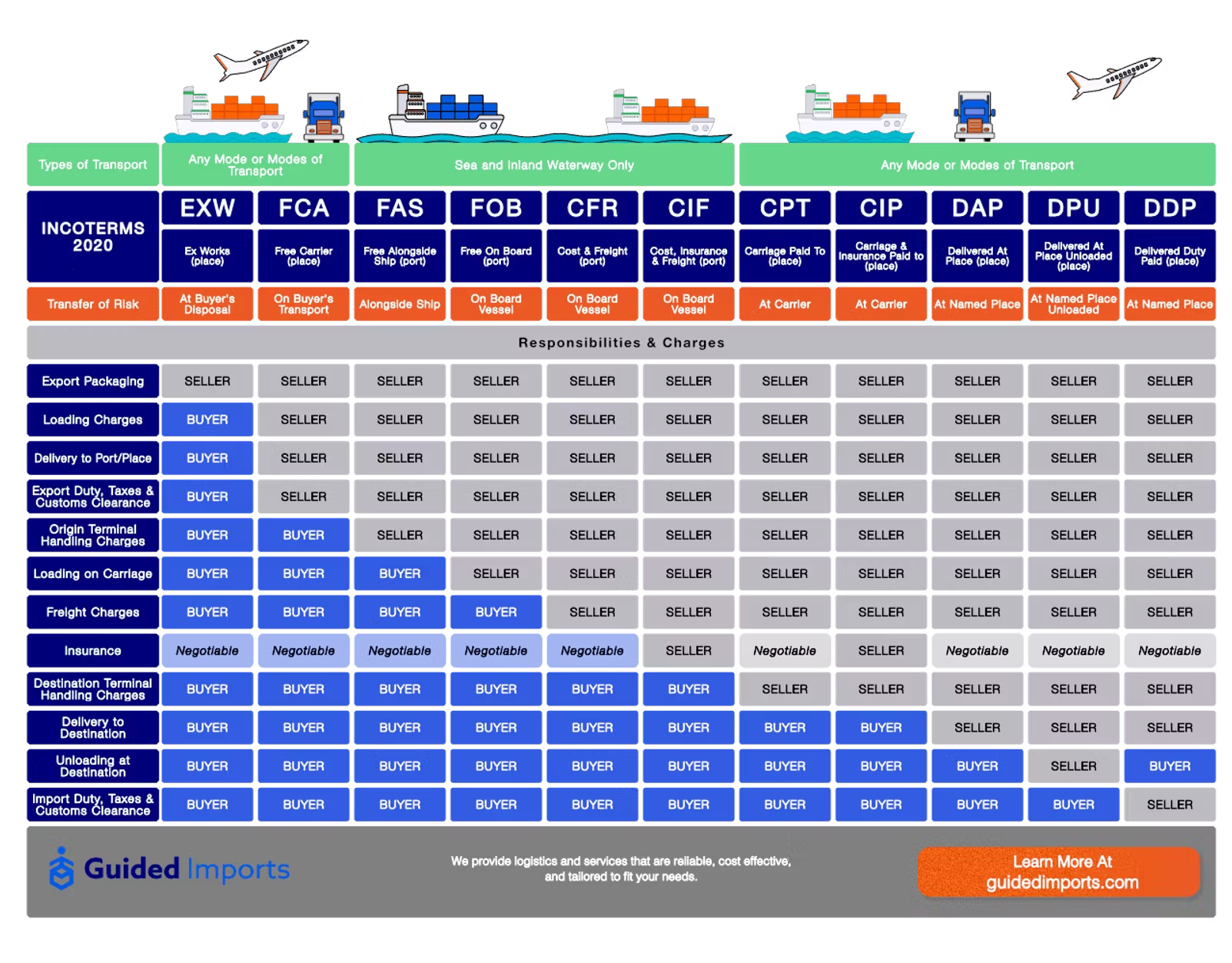
What are Incoterms?
International Commercial Trade Terms, or Incoterms for short, are selling terms buyers and sellers use so they can communicate which party is responsible for the tasks, costs, and risks associated with transferring the goods to the buyer when trading internationally. These are legally binding agreements published by the International Chamber of Commerce (ICC), and followed by virtually all countries.
Every 10 years, the ICC updates the shipping Incoterms to ensure that they stay consistent with the current process of international trade. Incoterms were last updated on January 1st, 2020, and include 11 unique types.
When buyers are purchasing products internationally, sellers will often include a three-letter abbreviation of one of the 11 Incoterms to define what the terms of the trade shall be. These terms represent various tasks, costs, risks, and logistics of getting goods whether by sea freight, air freight, and land freight.
Every shipping Incoterm defines the following responsibilities and obligations:
- Point of delivery – This section outlines where the goods will be transferred from the seller to the buyer.
- The responsible party for transportation costs – The section defines which party will cover the freight costs. This component is often characterized as Freight Prepaid or Freight Collect.
- Export and import requirements – Each term defines whether the seller or buyer is responsible for covering the costs and facilitating the export and import of the cargo.
- The responsible party of freight insurance – In some Incoterms, freight insurance is a requirement. Each Incoterm will define who must pay for freight insurance.
Here is a simplified explanation of each freight Incoterm:
- EXW – Ex Works or Ex-Warehouse: The seller is responsible for packing the products and making the goods available. The cargo is transferred to the buyer while the freight is still at the seller’s site. The buyer is then responsible for exporting, shipping, and importing the cargo to their destination.
- FCA – Free Carrier: The seller is responsible for transporting the cargo to a defined destination within the seller’s country, usually a shipping terminal. Once the load has arrived at the designated destination, the shipment transfers to the buyer, the buyer then must pay the freight charges and fulfill the importing and delivery process. Depending on the named place, the cargo is either exported by the seller or the buyer.
- FAS – Free Alongside Ship: The seller must manage the full export process of the cargo until the goods are alongside the ship or other mode of transport. Once alongside the ship, the risk is transferred to the buyer. The buyer is responsible for loading the cargo onto their desired vessel and shipping the goods to their final destination.
- FOB – Free On Board: The seller must manage the full export process of the cargo, and load the products on the ship. Once the cargo has been safely loaded, the products transfer to the buyer. The buyer must pay for the freight costs that transport the goods to their destination and is responsible for all import costs.
- CFR – Cost and Freight: The seller is responsible for transporting the cargo to the buyer’s port. Once the goods have arrived at the port, the responsibility transfers to the buyer. The buyer then must unload the cargo and import the goods into the destination country, followed by importing and delivering to the final destination.
- CIF – Cost, Insurance & Freight: The seller is responsible for the costs to ship and insure the cargo to the buyers requested port. Once the goods arrive at port, the responsibility of the goods transfers to the buyer. The buyer then must cover the costs to unload, import, and deliver their shipment. CIF requires the seller to purchase freight insurance.
- CPT – Carriage Paid To: The seller must ship and unload the cargo from the vessel at the defined place of delivery. Once the goods are unloaded, the cargo transfers to the buyer, who is then responsible for importing and transporting the freight to the final destination.
- CIP – Carriage & Insurance Paid: The seller must cover the costs to ship and insure the cargo to the defined place of delivery. The shipment transfers to the buyer after the cargo is unloaded and delivered to the terminal. After the goods are unloaded and delivered to the defined terminal, the shipment transfers to the buyer. The buyer must import and fulfill the remainder of the shipping process to move the goods to the final destination. CIP requires the seller to purchase freight insurance.
- DAP – Delivered at Place: The seller must deliver the cargo to the final, defined destination. Once delivered the cargo transfers to the buyer. The buyer must unload the shipment from the truck. The buyer is also responsible for import duty, taxes, and customs clearance.
- DPU – Delivered at Place Unloaded: The seller must deliver and unload the cargo to the final destination. Once the shipment is successfully unloaded at the buyer’s warehouse, the responsibility transfers to the buyer. The buyer is responsible for import duty, taxes, and customs clearance.
- DDP – Delivered Duty Paid: The seller is responsible for delivering the cargo to the final destination, and paying the import duty, taxes, and customs clearance. Once the cargo arrives at the destination, the responsibility transfers to the buyer, who must cover the costs to unload the shipment. DDP is the only Incoterm that requires the seller to pay all duty charges.
Advantages of Using Freight Incoterms
Incoterms communicate a binding agreement between the buyer and seller that outlines the responsibilities between the manufacturer and purchaser of goods in regards to the delivery to the products.
While it is not a requirement for sellers to quote an Incoterm when selling internationally, the advantage of doing so helps avoid confusion over roles and responsibilities between the two parties. As language barriers and cultural differences are commonplace in international trade, these terms simplify an often complicated process and help communicate a large portion of the process of transferring the goods from the seller to the buyer. If you’re new to importing and incoterms, consider working with a China freight forwarder to avoid costly misunderstandings.
What’s Not Included in Shipping Incoterms I Need to Be Aware of as a Buyer?
Incoterms help communicate a large portion of the logistics and cargo transferring process, which is why most international traders opt to rely on them. While these terms communicate a lot, there is a significant amount of information they don’t explain. Buyers should be fully aware of not only what these terms mean, but also what is not included in each of these terms, as miscommunication could easily lead to misunderstandings and costly mistakes.
International Commercial Trade Terms help communicate the terms of delivery of a product purchased internationally. These terms do not define the payment terms of a product or other outside rights. They do not explain how the buyer should pay for the goods, and they do not determine who is responsible for the cargo in the event of defective, incorrect, or failed productions.
Incoterms do not exist to protect the buyer from fraud or guarantee the products in any way. The only terms Incoterms define is which party is responsible during the transportation process. Incoterms do not act as a contractual agreement for the sale of a product; instead, they help communicate a portion of the purchase agreement to both parties.
An aspect that can be confusing to some buyers is determining whether or not Incoterms protect buyers from the risk of damage, loss, or theft of cargo. Each Incoterm can help define each of these concerns; however, it is essential to point out, there are only two Incoterms that require the seller to purchase insurance on the freight. Unless freight insurance has been agreed upon before a shipment, the buyer would need to buy insurance on the cargo separately.
Where Can I Learn More About the Incoterm 2020 Rules?
The International Chamber of Commerce publishes updated Incoterms every ten years. While companies like Guided Imports rely on ensuring they are entirely up to date with the ICC’s terms, you can learn more about the rules on the ICC website, or directly downloading our guide that follows all updates published.
Understanding Freight Incoterms Responsibilities
Not all Incoterms are valid for all types of shipments. While all Incoterms are valid for waterway shipments, some can only be used for waterway transport, and not land or air. Knowing these differences can be crucial, because if you use a waterway only Incoterm and ship using an alternative method, you may find yourself needing to cover additional, unexpected charges.
Below is a list of Incoterms you can use for all types of shipment methods;
- EXW – Ex Works or Ex-Warehouse
- FCA – Free Carrier
- CPT – Carriage Paid To
- CIP – Carriage and Insurance Paid To
- DAP – Delivered At Place
- DPU – Delivered At Place Unloaded
- DDP – Delivered Duty Paid
Below are Incoterms you can only use for sea and inland waterway transport:
- FAS – Free Alongside Ship
- FOB – Free on Board
- CFR – Cost and Freight
- CIF – Cost, Insurance Freight
What is the difference between ‘Freight Collect’ and ‘Freight Prepaid’?
Freight Prepaid and Freight Collect are terms that can commonly be used between buyers and sellers when discussing international freight. When a seller mentions ‘Freight Collect’, they refer to one of the four Incoterms that require the buyer to collect and pay all freight charges. The Incoterms associated with Freight Collect are:
- EXW – Ex Works or Ex-Warehouse
- FCA – Free Carrier
- FAS – Free Alongside Ship
- FOB – Free on Board
Freight Prepaid indicates the seller will pay for the freight charges. The remaining seven Incoterms consist of Freight Prepaid:
- CFR – Cost and Freight
- CIF – Cost, Insurance & Freight
- CPT – Carriage Paid To
- CIP – Carriage and Insurance Paid To
- DAP – Delivered At Place
- DPU – Delivered At Place Unloaded
- DDP – Delivered Duty Paid
What types of insurance is a seller required to obtain when shipping under CIF and CIP Incoterms?
Two International Commercial Trade Terms require the seller to purchase insurance on the cargo prior to shipment. These two terms are CIF and CIP. Each of these terms has unique requirements for the type of insurance a seller must obtain.
- CIF, or Cost, Insurance & Freight requires an insurance policy with the minimum cover of the Institute Cargo Clause (C).
- CIP, or Carriage & Insurance Paid To requires an insurance policy with a minimum cover of the Institute Cargo Clause (A).
How do a buyer and seller agree on which Incoterm to use?
Unless specifically requested by a buyer, sellers often have preferred Incoterms they use that work best for them and their customers. Buyers can often have unique preferences, which are conveyed to sellers, and through this communication, a buyer and seller can come to an agreement on the most ideal Incoterm for their deal.
In order for Incoterms to be contractually valid, the terms should be listed on the purchase agreement, sales invoice, or sales contract. As these are contractual terms, buyers and sellers should be clear with their agreement and not rely on verbal communication to define the responsibility of each party when shipping products internationally.
There is no special documentation or form needed when selecting an Incoterm; instead, the term should be listed in conjunction with the product price and defined as the agreed-upon incoterm.
Incoterms can change during an order process. For example, if a shipment was intended for sea, but due to delays or unforeseen circumstances, the shipment needs to be shipped via air, an Incoterm could change. As we discussed above, not all terms are valid for air travel. If there is a change in the terms, buyers and sellers would need to communicate this change, just as they would communicate any other change taking place in a purchase agreement.